奧斯卡•王爾德(Oscar Wilde,1854–1900)
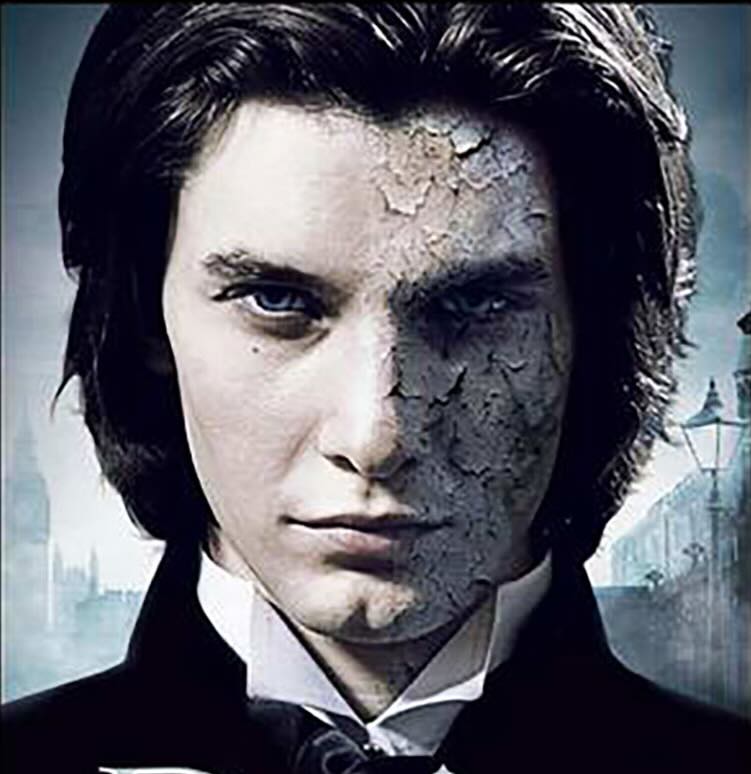
道連•葛雷(Dorian Gray)的像
第七章
........
過不多久,道連雇了一輛街車回家。他在台階上逗留片刻,環顧靜悄悄的廣場。周圍房屋的窗戶有的關得嚴嚴實實,有的垂著花哨的簾子。這時天空已是純淨的蛋白石顏色,屋頂在這樣的天幕前閃著銀光。一縷輕煙正從對面一支煙囪里升起,像一條紫色的緞帶在呈螺鈿色澤的空氣中裊裊浮動。 寬敞的穿堂牆上鑲著櫟木嵌板,從天花板上垂下一座鍍金的威尼斯大吊燈—一大概是從當地某總督的遊覽船上獵獲的戰利品, ——其中三個噴口還亮著,閃爍不定的火焰像鑲著白邊的淺藍色花瓣。他擰熄了燈,把帽子和短披風往桌上一扔,穿過書齋向臥室一—樓下一間八角形的大房間——走去。隨著道連新近對奢華的生活講究起來,他的臥室也剛剛裝潢一新,掛上了幾張珍奇的文藝復興時期的壁毯,那是在塞爾比莊園頂樓貯藏室里發現的。他正要轉動門把,視線落到了貝澤爾•霍爾渥德為他畫的肖像上。道連像受了什麼驚嚇似地倒退一步。然後他走進臥室,神色顯得迷惑不解。他取下插在上衣紐孔中的花,猶豫了一會兒。最後他還是回到書齋里,走到畫像前細看了一番。光線受阻於淡黃色的綢簾子,不甚明亮。他覺得肖像的面部起了點兒變化,神態和原來不大一樣:嘴角流露出些許冷酷。這可是件聖事。
他轉身走到窗前,把簾子拉上去。燦爛的朝陽把整個房間都照亮了,一些莫名其妙的怪影遭此掃蕩,只得瑟瑟發抖地躲在陰暗角落里。可是,他在畫像面部發現的些微奇怪的表情非但沒有消失,反而更明顯了。強烈的陽光在畫像上晃動,把嘴角冷酷的線條向他揭示得清清楚楚,彷彿他做了什麼虧心事後又從鏡子里照見了自己。 他打了個寒顫,從桌上拿起一面象牙框子上雕著愛神的鴨蛋鏡 ——享利勳爵送給他的許多禮物之一,——急忙向光潔的鏡子深處照去。他鮮紅的嘴唇並沒有現出畫像上那樣冷酷的線條。這到底是怎麼回事?
他揉揉眼睛,一直走到畫像緊跟前,重新細細看了一番。他看不出色彩本身有任何異樣,然而整個神態無疑起了變化。這不是他的幻覺。事情明明白白擺在那裡,太可怕了。 他在一把椅子上頹然坐下,開始思考。突然,他腦際響起了肖像完工那天自己在貝澤爾•霍爾渥德畫室里說過的話。是的,他記得十分清楚。當時他發了一個痴願:希望自己能永保青春,而讓畫像漸漸老去;希望自己的美貌如花開不敗,而讓畫布上的容顏承受他的欲念和罪惡的重荷;畫上的形象即使佈滿痛苦和憂慮的皺紋亦無妨,只要自己能保持住當時他還剛剛意識到的年少英俊的翩翩風采。莫非他的願望竟然實現了?這種事情是不可能的。甚至想一想都叫人害怕。可是,畫像明明在他面前,嘴角帶著些許冷酷。
........
Oscar Wilde(1854–1900)
The Picture Of Dorian Gray
Chapter 7
...............
After a little while, he hailed a hansom, and drove home. For a few moments he loitered upon the doorstep, looking round at the silent Square with its blank, close-shuttered windows, and its staring blinds. The sky was pure opal now, and the roofs of the houses glistened like silver against it. From some chimney opposite a thin wreath of smoke was rising. It curled, a violet riband, through the nacre-coloured air.
In the huge gilt Venetian lantern, spoil of some Doge's barge, that hung from the ceiling of the great oak-panelled hall of entrance, lights were still burning from three flickering jets: thin blue petals of flame they seemed, rimmed with white fire. He turned them out, and, having thrown his hat and cape on the table, passed through the library towards the door of his bedroom, a large octagonal chamber on the ground floor that, in his newborn feeling for luxury, he had just had decorated for himself, and hung with some curious Renaissance tapestries that had been discovered stored in a disused attic at Selby Royal. As he was turning the handle of the door, his eye fell upon the portrait Basil Hallward had painted of him. He started back as if in surprise. Then he went on into his own room, looking somewhat puzzled. After he had taken the buttonhole out of his coat, he seemed to hesitate. Finally he came back, went over to the picture, and examined it. In the dim arrested light that struggled through the cream-coloured silk blinds, the face appeared to him to be a little changed. The expression looked different. One would have said that there was a touch of cruelty in the mouth. It was certainly strange.
He turned round, and, walking to the window, drew up the blind. The bright dawn flooded the room, and swept the fantastic shadows into dusky corners, where they lay shuddering. But the strange expression that he had noticed in the face of the portrait seemed to linger there, to be more intensified even. The quivering, ardent sunlight showed him the lines of cruelty round the mouth as clearly as if he had been looking into a mirror after he had done some dreadful thing.
He winced, and, taking up from the table an oval glass framed in ivory Cupids, one of Lord Henry's many presents to him, glanced hurriedly into its polished depths. No line like that warped his red lips. What did it mean?
He rubbed his eyes, and came close to the picture, and examined it again. There were no signs of any change when he looked into the actual painting, and yet there was no doubt that the whole expression had altered. It was not a mere fancy of his own. The thing was horribly apparent.
He threw himself into a chair, and began to think. Suddenly there flashed across his mind what he had said in Basil Hallward's studio the day the picture had been finished. Yes, he remembered it perfectly. He had uttered a mad wish that he himself might remain young, and the portrait grow old; that his own beauty might be untarnished, and the face on the canvas bear the burden of his passions and his sins; that the painted image might be seared with the lines of suffering and thought, and that he might keep all the delicate bloom and loveliness of his then just conscious boy-hood. Surely his wish had not been fulfilled? Such things were impossible. It seemed monstrous even to think of them. And, yet, there was the picture before him, with the touch of cruelty in the mouth.
............